Same technology.
Different architecture.
Centralised platforms, invisible infrastructure, and people reduced to consumers of systems they cannot inspect.
 Solystopia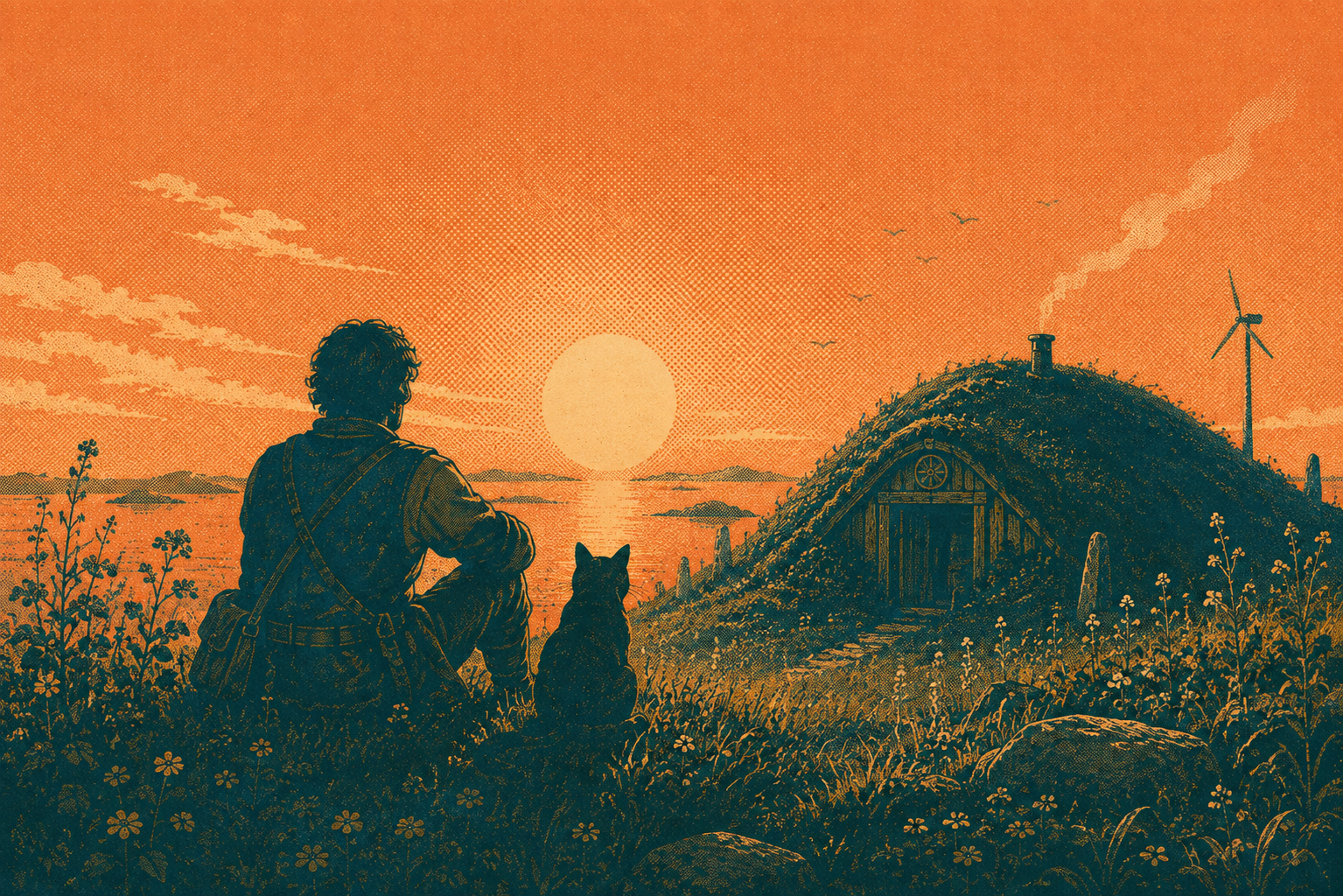
Field guide 01 — a rallying cry
“Technology should make us harder to control, not easier to replace.”
A living argument for high technology, low dependency, and the return of practical freedom.
01b / The build in public
Live experiment
Project Hearthmind is the household proof: one local AI node, sovereign storage, measured electricity, and a documented path from design to operation. Every number on the right is the honest current state, not a rounded-up estimate.
01 / The problem
Our systems have become powerful while our lives have become fragile. We can summon anything, but cannot always make, mend, grow, or govern what we need.
Solystopia asks a different question: what if the most advanced society was the one that gave people more practical freedom, not less?
Continue the argument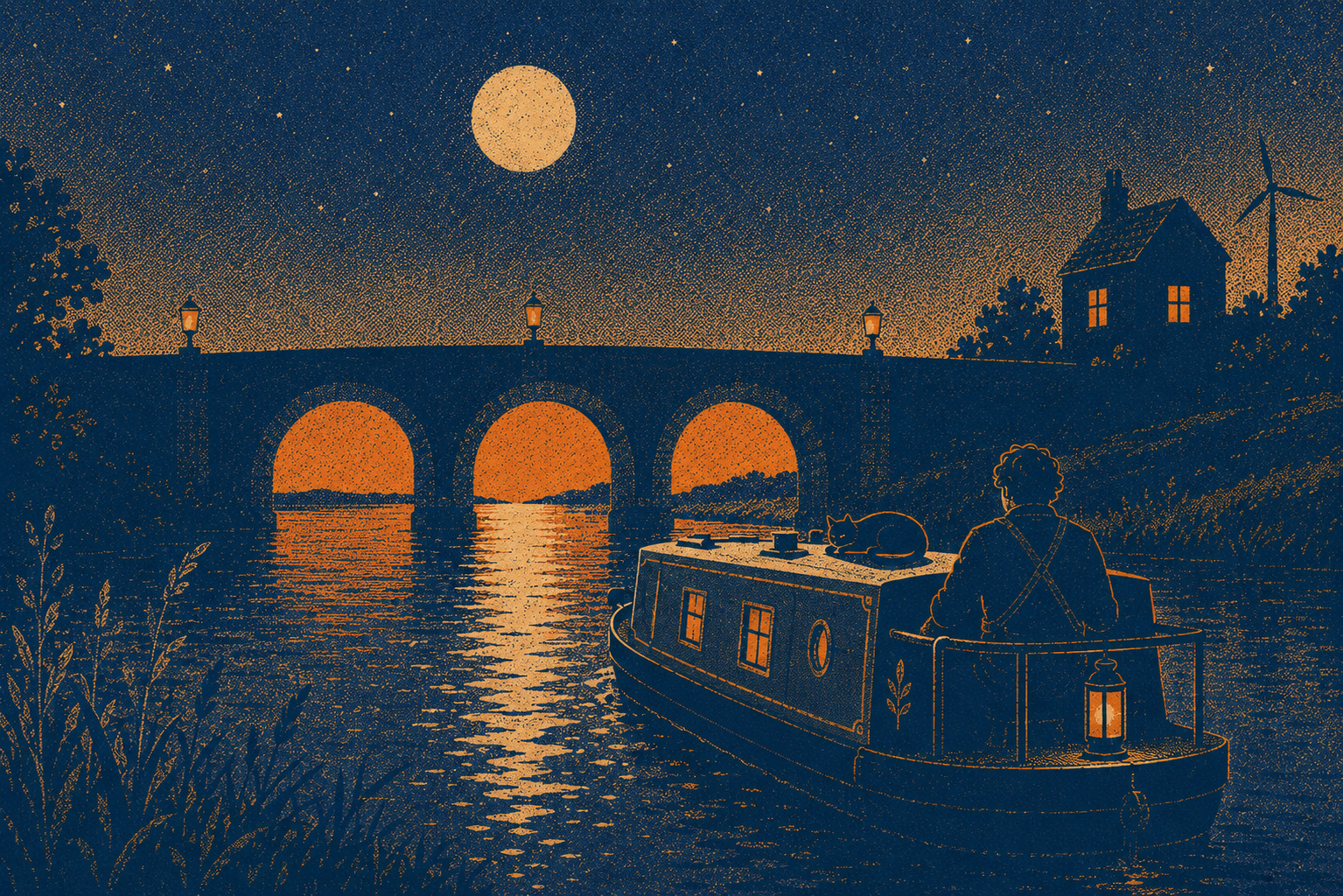
“Possessions are not resilience. Competence is.”
— Working note, Solystopia 01
02 / The inflection point
Artificial intelligence / robotics / automation — the two Britains
Centralised platforms, invisible infrastructure, and people reduced to consumers of systems they cannot inspect.
Tools that return time and capability to households, neighbourhoods, villages, and towns — the actual point of this whole argument.
Capability 01 / live tool
Build a local intelligence setup on a computer you control. Learn what it does, what it cannot do, and how to leave it behind.
Build Local Intelligence02c / Project Hearthmind — the live research project
One NVIDIA Spark. One household. Measured, not assumed.
Project Hearthmind is the practical test of the whole Solystopia argument: one DGX Spark, installed on private British land, measured for power draw, tokens per kilowatt-hour, and cloud spend avoided — with every claim classed by evidence and every source cited.
The constraint that decides which model sizes are usable locally, on one desktop unit.
Measured by an independent reviewer, well under the 240W ceiling — a household electricity bill, not a datacentre one.
List price range for the hardware — a capital cost a household can weigh against a cloud bill, transparently.
02b / How the movement works
The Solystopia loop
Every step is a real, working page — not a roadmap slide. Start anywhere; the loop carries you round.
The return of time
Every hour automation returns is a choice about what to do with it. Solystopia argues it should go back to the people it was taken from — not to a feed.
Time for family.
Time for craft.
Time for neighbours.
Time for study.
Time for worship.
Time for nature.
03 / A way of seeing
Solystopia is a publication and a method for reading the future without surrendering our judgement to it. Ask these five questions of any new system before you welcome it in.
Name the system before trying to improve it.
Separate useful relief from surrendered agency.
Follow ownership, maintenance, and the right to refuse.
Read the direction of travel, not only the feature list.
Imagine the same capacity arranged around human independence.
04 / The means of sustainability
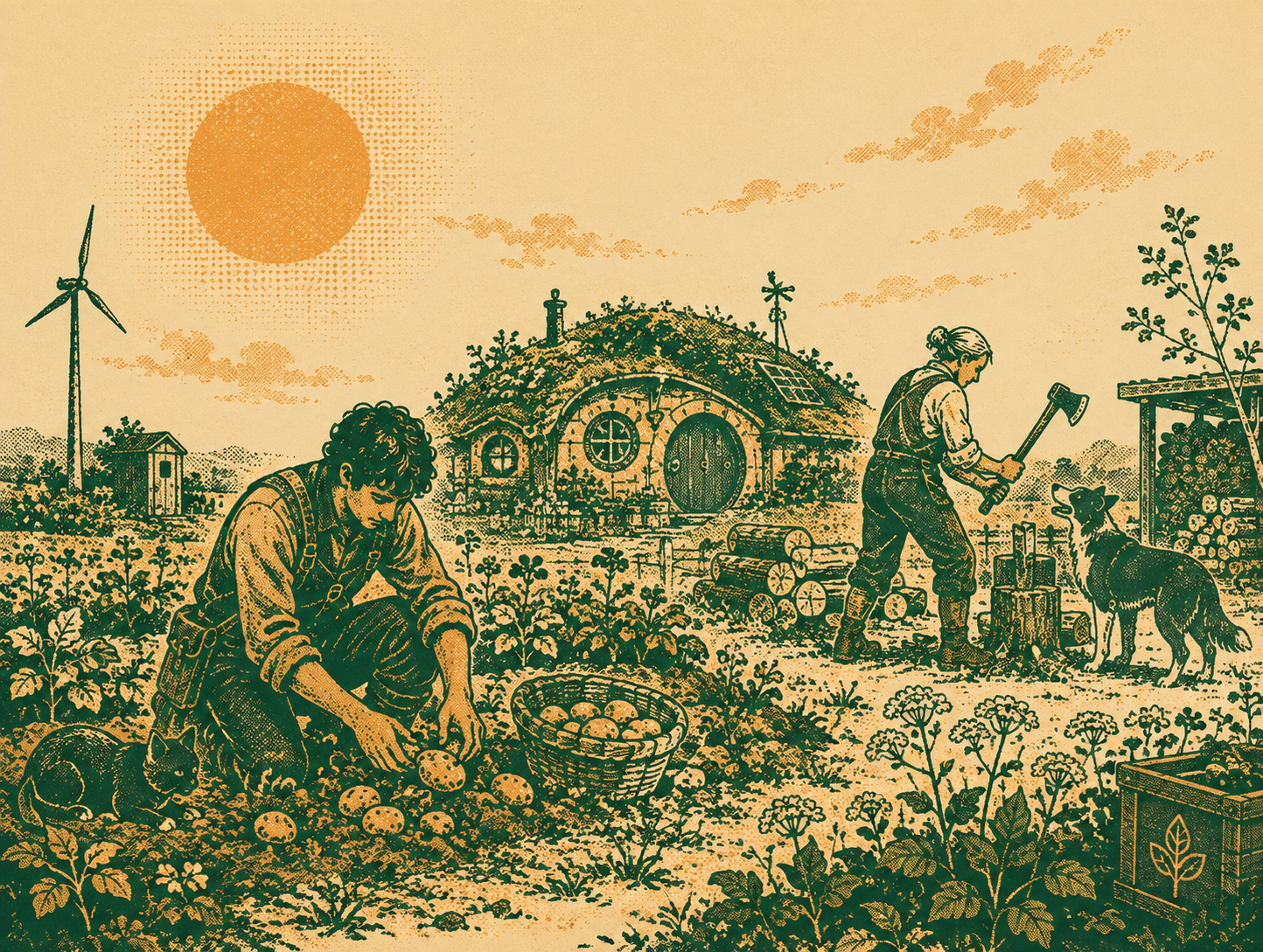
The smallest scale at which a system remains effective. As the camera pulls back, resilience becomes spatial: house, neighbourhood, village, nation.
Food, energy, water, tools, skills
Care, workshops, libraries, shared stores
Schools, clinics, markets, microgrids
Fibre, rail, energy, public research
05 / Field notes
Author observes
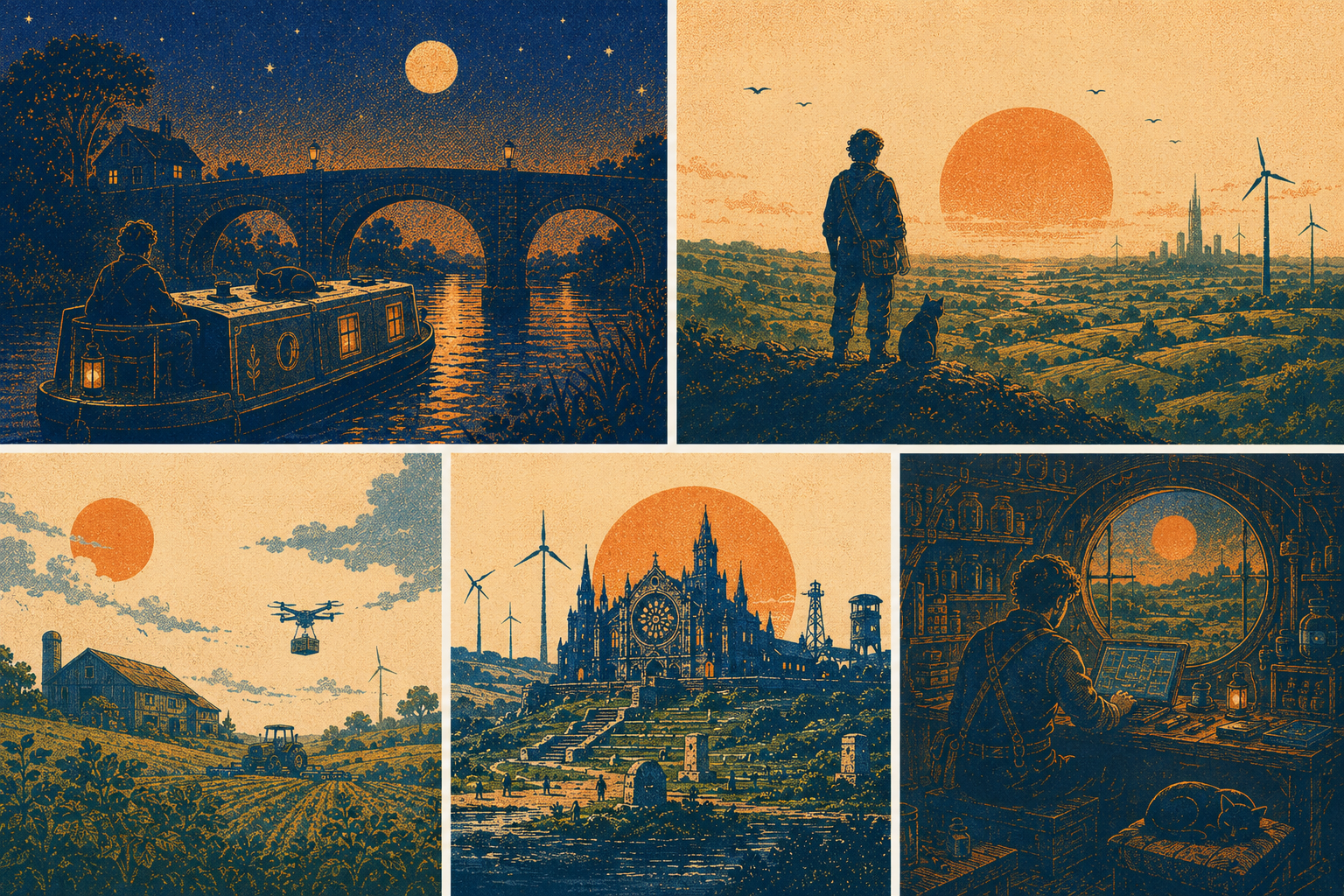
Technology should adapt to nature, not nature to the machine. A sensor can be a form of attention. A small robot in an orchard can be a form of care.
Read field note 01406 / The paper
Solystopia working paper 01
The first academic paper sets out the argument behind Solystopia: how advanced tools can strengthen practical freedom when they are governed at the smallest useful scale.
Join the private release list for the paper, citation details, and a short note from the author when it is published.
07 / Contact
The long future is a shared project
Technological abundance in service of human independence.
Start a conversation